Schools Cannot Sit in Judgment Over the State: The Supreme Court Reaffirms the Right to Education
A note on Lucknow Public School, Eldico & Anr. v. The State of Uttar Pradesh & Ors., 2026 INSC 422
Table of Contents
Introduction
On April 28, 2026, a bench of the Supreme Court of India comprising the bench of Hon’ble Justice Pamidighantam Sri Narasimha and Hon’ble Justice Alok Aradhe delivered a concise but consequential judgment dismissing a Special Leave Petition filed by Lucknow Public School, Eldico. The case, arising out of Diary No. 60657 of 2024, required the Court to do something it has had to do more than once remind a private school that it has no power to override the admission decision of the State Government under the Right of Children to Free and Compulsory Education Act, 2009.
The facts were straightforward. A young girl applied for admission to a neighbourhood school under the process prescribed by the Uttar Pradesh Right of Children to Free and Compulsory Education Rules, 2011 for the academic year 2024-25. She was duly selected, her name appeared on the published list forwarded to the school, and yet she was turned away at the gate. The school cited uncertainty about her eligibility. The Allahabad High Court, in Writ Petition (C) No. 6121 of 2024, directed the school to grant her admission, holding that schools cannot sit in appeal over a decision taken by the State Government. The Supreme Court agreed entirely and dismissed the SLP.
The Constitutional Foundation: Article 21A
The Court’s analysis begins, as it must, with Article 21A of the Constitution, which was inserted by the Constitution (Eighty-Sixth Amendment) Act, 2002. The provision imposes a positive obligation on the State to provide free and compulsory education to children between six and fourteen years of age. The word ‘positive’ is critical. Unlike classical negative rights that merely restrain State interference, Article 21A demands active discharge of duty. The Court quotes its earlier decision in Dinesh Biwaji Ashtikar v. State of Maharashtra & Ors., 2026 INSC 56, to note that identifying this as a positive right logically requires the identification of duty bearers and accountability mechanisms.
The Court lists five duty bearers: the appropriate government, the local authority, Neighbourhood schools, parents or guardians, and elementary school teachers. The distribution of obligations across these five categories is deliberate. The right to education cannot be collapsed into a single duty of the State. It is a shared civic responsibility. What the school sought to do in this case unilaterally reassess a child’s eligibility after the State had already done so cut directly against this architecture.
The Statutory Framework: Section 12 and Rule 8
Section 12 of the RTE Act, 2009 is the provision that operationalize Article 21A in relation to neighbour hood schools. It mandates that every recognized private unaided school shall admit, in Class I, children belonging to weaker sections and disadvantaged groups to the extent of at least twenty-five percent of the strength of that class, and shall provide free and compulsory elementary education to such children until completion of elementary education. This is not an aspirational target. It is a mandatory statutory obligation.
Under Rule 8 of the UP RTE Rules, 2011, the admission process is required to be completely transparent. Schools must maintain and publish details of applicants, inform in writing any child who is not admitted with reasons, and strictly follow the admission process prescribed by the State Government. Critically, once the State completes its scrutiny and forwards an allocation list to a school, the school has no residual discretion to refuse admission. The Court is explicit: the limited window for a school to reconsider the government’s decision is a conscious choice of the State to avoid delays in securing the children’s right to education. This framing is important. The school’s argument that it had some unresolved doubt about eligibility would have sounded reasonable in an ordinary contractual or administrative context. In the RTE framework, however, it does not hold. The legislature has deliberately assigned the eligibility determination to the State precisely because schools, when given discretion, have historically used it to screen out children from weaker and disadvantaged sections. The statutory design closes that window.
The Neighbourhood School as a Constitutional Instrument
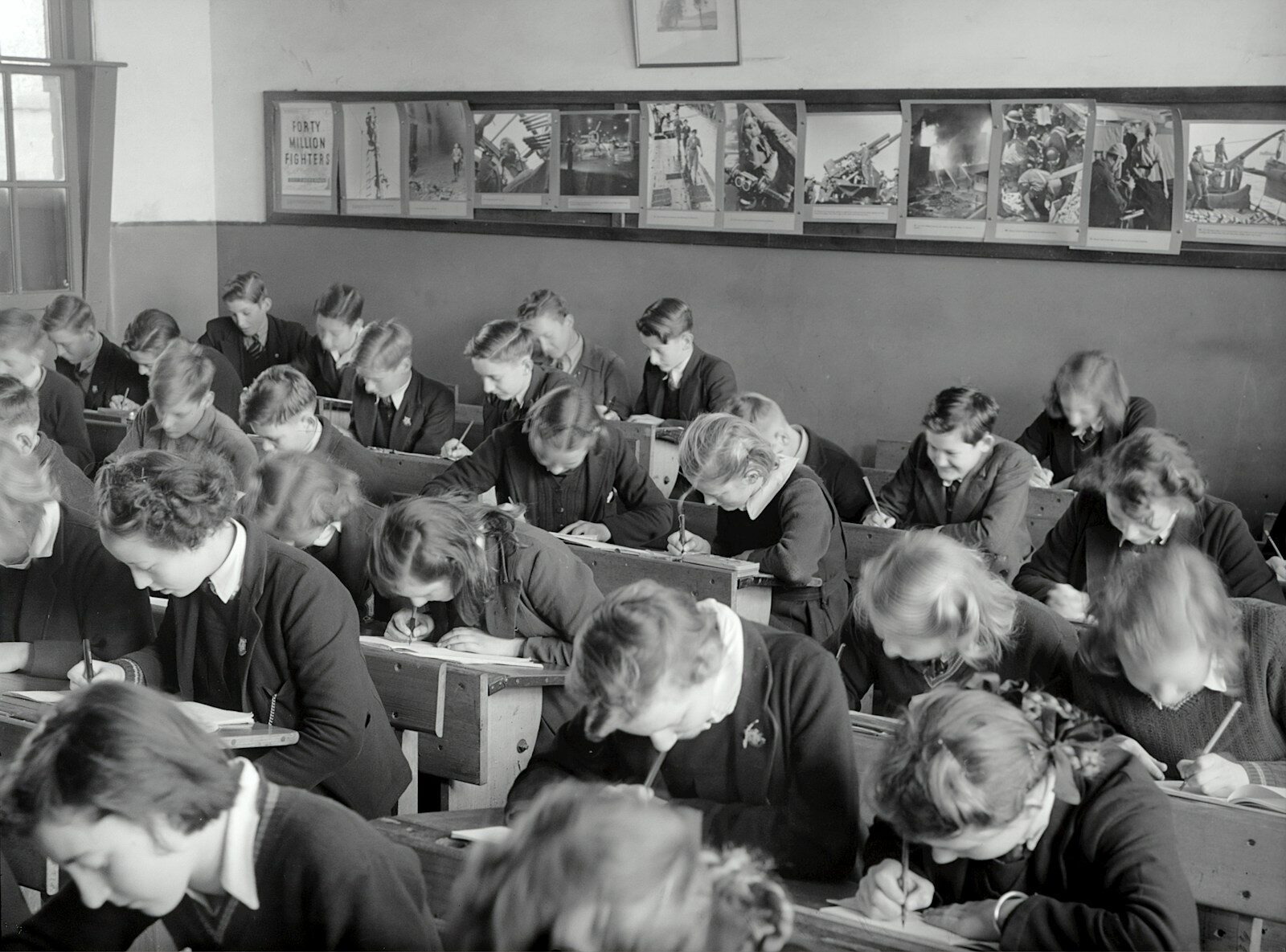
Perhaps the most significant passage in the judgment is the Court’s description of the neighbourhood school concept as a deliberate constitutional strategy. Section 12, the Court holds, is not merely an administrative regulation; it is an instrument designed to operationalize equality of status, dignity, and social integration among children in their formative years. The twenty-five percent reservation is not simply about numbers. It is about the physical and social space of the classroom. By mandating that children from weaker sections sit alongside children from more privileged backgrounds in the same school, the legislature aims to break down entrenched barriers of caste, class, and gender at the earliest possible stage of a child’s development. The school, in the Court’s vision, is a common civic space. When a school refuses admission to a child whose name is on the State’s list, it does not merely deny one child a seat; it undermines the entire social engineering project that Section 12 was designed to advance. The Court underscores this by connecting it to the preamble’s declaration of equality of status. It is rare for a judgment of this nature to invoke preamble values directly. The Court does so here to signal that the right to education is not a technical provision to be defeated by procedural objections. It is a constitutional commitment that courts, governments, and institutions must actively work to realize.
What Schools Can and Cannot Do
The judgment also addresses the practical question of what a school should do when it genuinely has a disagreement with the State’s selection. The answer is clear: the school may make a representation to the concerned authority, but it must grant admission to the student in the meantime. The school cannot wait for the outcome of that representation before opening its doors. This immediacy, as the Court holds, is essential to actualize the promise of Article 21A. This is a workable and proportionate solution. It does not eliminate the school’s right to raise concerns through proper channels. It simply prevents those concerns from being used as a tool to delay or deny a child’s access to education while the wheels of bureaucratic dispute turn. For a six-year-old child, a delay of even a few months at the start of schooling can have lasting consequences.
The Role of Courts
The judgment concludes with a call to action addressed not only to schools and governments but also to courts themselves. The judiciary, the Court holds, bears the burden of ensuring that the process of admission is easily accessible, effective, and efficient. Judicial remedies against inaction or inefficiency must be redressed effectively and expeditiously. Constitutional courts must, as the Court puts it, walk that extra mile to provide easy access and efficient relief to parents who complain of denial of the right. This is a significant statement. It reflects the Court’s awareness that the RTE framework, however well-designed on paper, can be frustrated at the ground level. A parent from a weaker section does not have the resources or the knowledge to navigate prolonged litigation. Courts must meet them where they are.
Concluding Observations
The judgment in Lucknow Public School, Eldico is a restatement rather than a departure. Courts have said this before and have had to say it again. That they continue to say it tells its own story about the gap between the law on the books and the law in practice. Private schools continue to resist RTE admissions, often through procedural delay rather than outright refusal. Each such case that reaches a court represents a systemic failure upstream. The real test of this judgment, and of the RTE framework as a whole, lies not in the outcome of this particular SLP but in whether the children on the waiting lists across Uttar Pradesh and the rest of the country actually walk into those classrooms. That outcome depends on the State, on school managements, on district education officers, and on a society willing to take seriously the constitutional aspiration that every child, regardless of birth, deserves an equal start.
For more details, write to us at: contact@indialaw.in
By entering the email address you agree to our Privacy Policy.