The “Final Cut” Of Justice: When A Box Office Flop Isn’t A Criminal Con
A Supreme Court Thriller: The Case of the Missing Profits and the Quest for Dishonest Intent
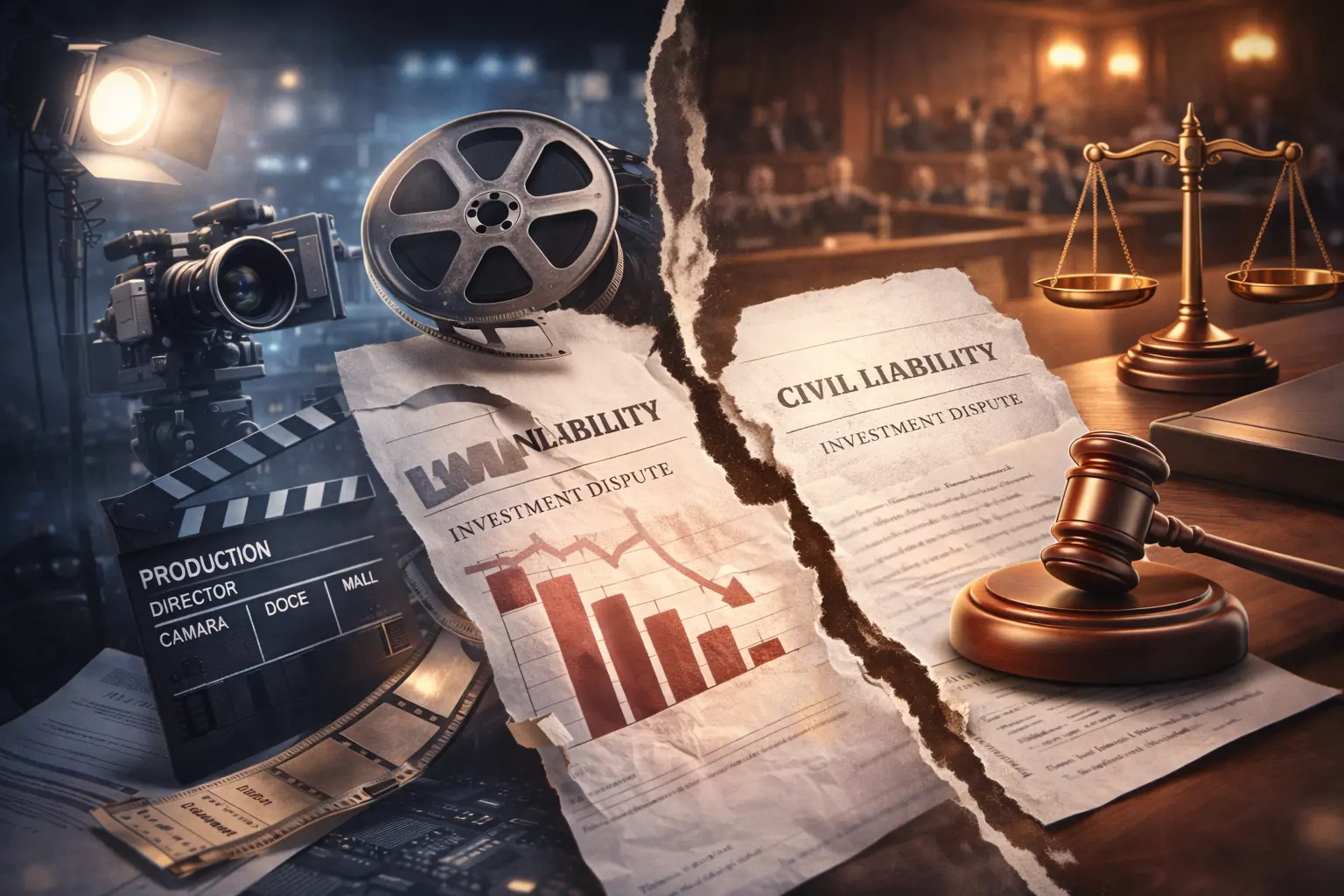
In the high-stakes world of cinema, not every script makes it to the big screen, and not every investment yields a “blockbuster” return. But when a movie project hits the cutting room floor financially, does the producer belong in a jail cell or a civil courtroom? The Supreme Court of India recently delivered its own “final cut” in the case of V. Ganesan v. State & Anr. (2026), clarifying the thin line between a risky business failure and the crime of cheating.
Table of Contents
The Plot: A Producer in Peril
Our story begins with the Appellant (the Producer), who was in the middle of a film production and found himself running short on “gas”, or in this case, funds. Enter the De-facto Complainant (the Investor), who stepped in to lend money.
The deal was sweet: an initial investment for a 30% share in profits, followed by more cash for a total 47% stake in the movie’s success. However, the real-world climax was far from a Hollywood ending. The movie was made and released, but the promised riches never materialized. When the producer issued two post-dated cheques of ₹24 lakhs each to return the principal, they bounced like a bad stunt.
The Investor, feeling he had been played, filed a criminal report alleging:
- Criminal Breach of Trust (Section 406 IPC).
- Cheating (Section 420 IPC).
The Legal Conflict: Civil Breach vs. Criminal Intent
The High Court of Madras initially quashed the “Criminal Breach of Trust” charge, noting there was no actual “entrustment” of property. However, it allowed the Cheating charge to stand, suggesting the producer’s constant promises were a form of inducement that needed to be settled at trial.
The Supreme Court, however, looked at the “Director’s Cut” of the facts and disagreed. Justice Manoj Misra noted that for a charge of cheating to stick, dishonest intention must exist from the very beginning (the “Inception” of the deal).
Why the “Producer” Wasn’t a “Villain”
- The Movie Exists: Unlike a real scam where no movie is ever made, the producer actually finished and released the film. This proved his original promise wasn’t a lie.
- High-Risk Drama: Cinema is a gamble. If you invest for a “share of profits,” you are taking the risk that those profits might be zero. A flop isn’t a fraud.
- The Post-Dated Cheque Twist: The cheques weren’t used to lure the investor into giving money; they were issued later to try and pay back a debt. A bounced post-dated cheque is a matter for the Negotiable Instruments Act, not necessarily a sign of a cheating heart from day one.
The Precedents: The “Script” of the Law
The Court relied on classic legal “screenplays” to reach its verdict:
- Iridium India Telecom Ltd. v. Motorola Inc.: The court clarified that deception is the mandatory core of cheating, requiring a fraudulent or dishonest inducement that causes a person to deliver property they otherwise would not have.
- Vesa Holdings v. State of Kerala: It was held that a breach of contract only amounts to cheating if a fraudulent or dishonest intention existed at the very inception of the agreement. A mere subsequent failure to keep a promise is insufficient to presume such intention from the beginning; if the intent to deceive developed later, it remains a purely civil matter.
The Verdict: Case Quashed
In a unanimous decision, the Supreme Court set aside the High Court’s order and quashed the proceedings under Section 420 IPC. The Court concluded that this was a purely civil cause of action, a business deal gone sour, not a criminal conspiracy.
“Where the transaction is such that fulfilment of the promise is not entirely in the control of the promisor… the High Court may, in exercise of its inherent powers under the Code, or under Article 226 of the Constitution, as the case may be,… quash the criminal complaint/proceedings and relegate the aggrieved party to civil remedies.”
The Moral of the Story: In the world of law, as in the movies, you have to look at the whole arc of the character. If the producer intended to make the movie and did so, a lack of profit is a civil tragedy, not a criminal one.
For more details, write to us at: contact@indialaw.in
Reference:
By entering the email address you agree to our Privacy Policy.