Beyond the Golden Scales: Supreme Court Standardizes Compensation for Prosthetic Limbs in Motor Accident Claims
The fundamental objective of awarding damages in personal injury cases is governed by the principle of restitutio in integrum, which mandates restoring the injured party to their original position so far as money can compensate. In motor accident jurisprudence, quantifying this restoration, especially for amputees requiring lifelong prosthetic support, has frequently resulted in varying and inconsistent judicial awards. In a landmark ruling, the Supreme Court of India comprehensively addressed this legal vacuum in the matter of Prahlad Sahai v. Haryana Roadways & Anr. (Neutral Citation: 2026 INSC 396). The judgment establishes a standardized, humane, and rights-based framework for computing compensation for prosthetic limbs, future medical maintenance, and the assessment of income for unorganized sector workers.
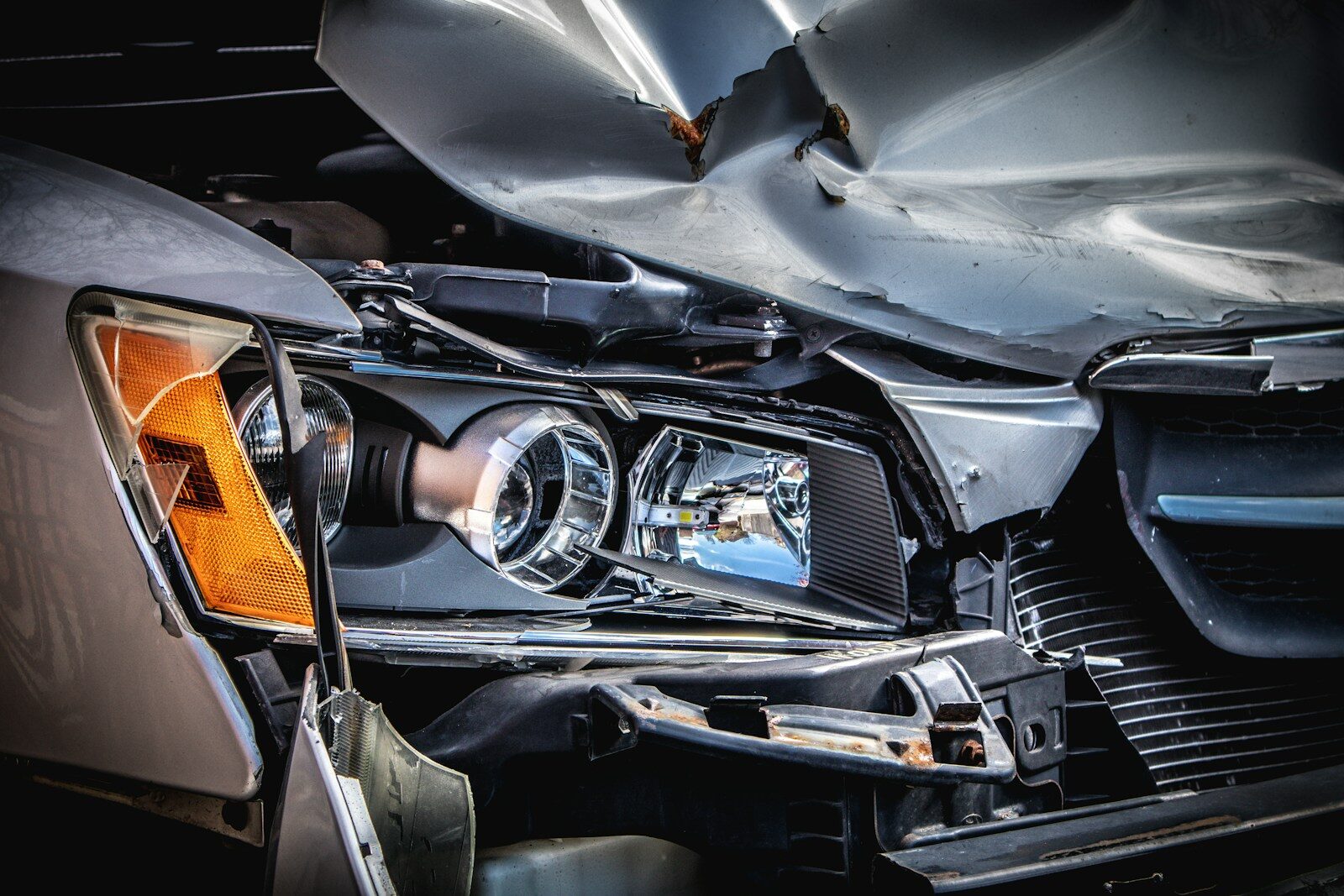
The factual matrix of the dispute stems from a catastrophic motor vehicle accident that occurred on May 2, 2007. The appellant, Prahlad Sahai, who was thirty-two years old at the time, was travelling as a pillion rider on a motorcycle in Jaipur when a bus operated by Haryana Roadways negligently collided with them from behind. The impact crushed the appellant’s right leg, ultimately necessitating a below-the-knee amputation. Prior to the accident, the appellant was employed as a driver of heavy vehicles, claiming a monthly earning of ₹6,000.
Seeking recompense, the appellant initially approached the Motor Accident Claims Tribunal (MACT), which awarded a compensation of ₹8,73,211. Aggrieved by the quantum, an appeal was preferred before the Rajasthan High Court, which marginally enhanced the award to ₹13,02,043. Crucially, however, both the Tribunal and the High Court committed a glaring omission by failing to award any specific compensation for the procurement, fitting, and lifelong maintenance of a prosthetic limb. Furthermore, the lower courts arbitrarily assessed the appellant’s monthly income at ₹4,500 instead of his claimed ₹6,000, prompting the appellant to invoke the appellate jurisdiction of the Supreme Court.
Before the apex court, the rival contentions highlighted a stark contrast in the interpretation of “just compensation” under Section 168 of the Motor Vehicles Act, 1988. The counsel for the appellant argued that an amputee aged thirty-two, with an assumed life expectancy of seventy years, would require continuous prosthetic support for thirty-eight years. Relying on medical evidence, the appellant asserted that prosthetic limbs necessitate replacement every five years, demanding a standardized financial block for purchase and maintenance. Additionally, the appellant contended that strict documentary proof of income cannot be exacted from a heavy vehicle driver operating in the unorganized sector, thereby asserting that his income should be calculated at ₹6,000 per month with a functional disability of one hundred percent.
Conversely, the respondents, comprising Haryana Roadways and the associated Insurance Company, vehemently opposed the enhancements. The primary defence hinged on the argument that compensation must remain reasonable and not manifest as an arbitrary windfall for the victim. To substantiate their stance on prosthetic costs, the Insurance Company heavily relied upon a Government of India notification dated July 9, 2024. This notification suggested a conservative price range of merely ₹20,000 to ₹25,000 for an artificial limb. The respondents further contested the income claims, citing a sheer lack of documentary evidence, and characterized the demands for litigation costs and future medical expenses as exorbitant.
Faced with these contentions, the Supreme Court framed critical issues regarding the jurisprudential basis for computing prosthetic limb compensation and whether courts are strictly bound by government-notified rates. In its careful legal analysis, the Court emphasized that a prosthetic limb is not a mere medical accessory, but an indispensable, highly personal appliance that restores a disabled individual’s confidence, mobility, and dignity. Drawing heavily upon international jurisprudence, the Court cited the UK decisions in David Pinnington v. Crossleigh and A v. Powys Local Health Board. These precedents established that if a claimant’s choice of a private, high-quality medical appliance is reasonable, a tortfeasor cannot escape full liability by pointing to cheaper, state-provided alternatives.
Applying these principles to the Indian context, the Supreme Court unequivocally rejected the government notification rates relied upon by the Insurance Company, terming them as “abysmally low.” The Court reaffirmed the legal standard set in Chandra Mogera v. Santosh A. Ganachari and Mohd. Sabeer @ Shabir Hussain v. U.P. SRTC, dictating that the average life span of an Indian claimant should be assumed as seventy years, and a prosthetic limb requires replacement every five years. Consequently, the Court calculated that the thirty-two-year-old appellant would necessitate seven prosthetic limbs over his lifetime.
Addressing the issue of income and disability, the Court relied upon the landmark rulings in Ramachandrappa and Syed Sadiq to hold that the absence of strict documentary evidence is not fatal to the claims of unorganized sector workers. The Court judicially recognized that a heavy vehicle driver in 2007 could reasonably earn ₹6,000 per month. Furthermore, since the amputation permanently incapacitated the appellant from resuming his profession as a heavy vehicle driver, the Court rightfully assessed his functional disability at an absolute one hundred percent.
In its final verdict, the Supreme Court delivered a comprehensive enhancement of the compensation to genuinely reflect the principle of restitutio in integrum. The Court awarded a consolidated sum of ₹21,00,000 for the cost of seven prosthetic limbs, calculated at a standardized rate of ₹3,00,000 per limb, alongside ₹5,00,000 for lifelong maintenance. The loss of future income was significantly enhanced by ₹8,02,368, factoring in the revised income, future prospects at forty percent, and the total functional disability. Including minor enhancements for income loss during treatment and a consolidated ₹2,00,000 for litigation expenses, the Court directed the Insurance Company to pay an additional sum of ₹36,20,350 within four weeks, carrying an interest of nine percent per annum in case of default.
This judgment is a vital course correction in personal injury litigation. By firmly standardizing the periodic replacement costs of prosthetic limbs and outrightly rejecting inadequate government metrics, the Supreme Court has ensured that victims of tragic accidents are not condemned to substandard rehabilitative care. The decision boldly reinforces the philosophy that tortious compensation must transcend mere survival, aiming instead to wholly restore the dignity, bodily autonomy, and functional independence of the disabled.
For further details write to contact@indialaw.in
By entering the email address you agree to our Privacy Policy.