Third-Party Auditors, Digital Monitoring, and Administrative Restructuring: The Delhi Fire Service (Amendment) Rules, 2025
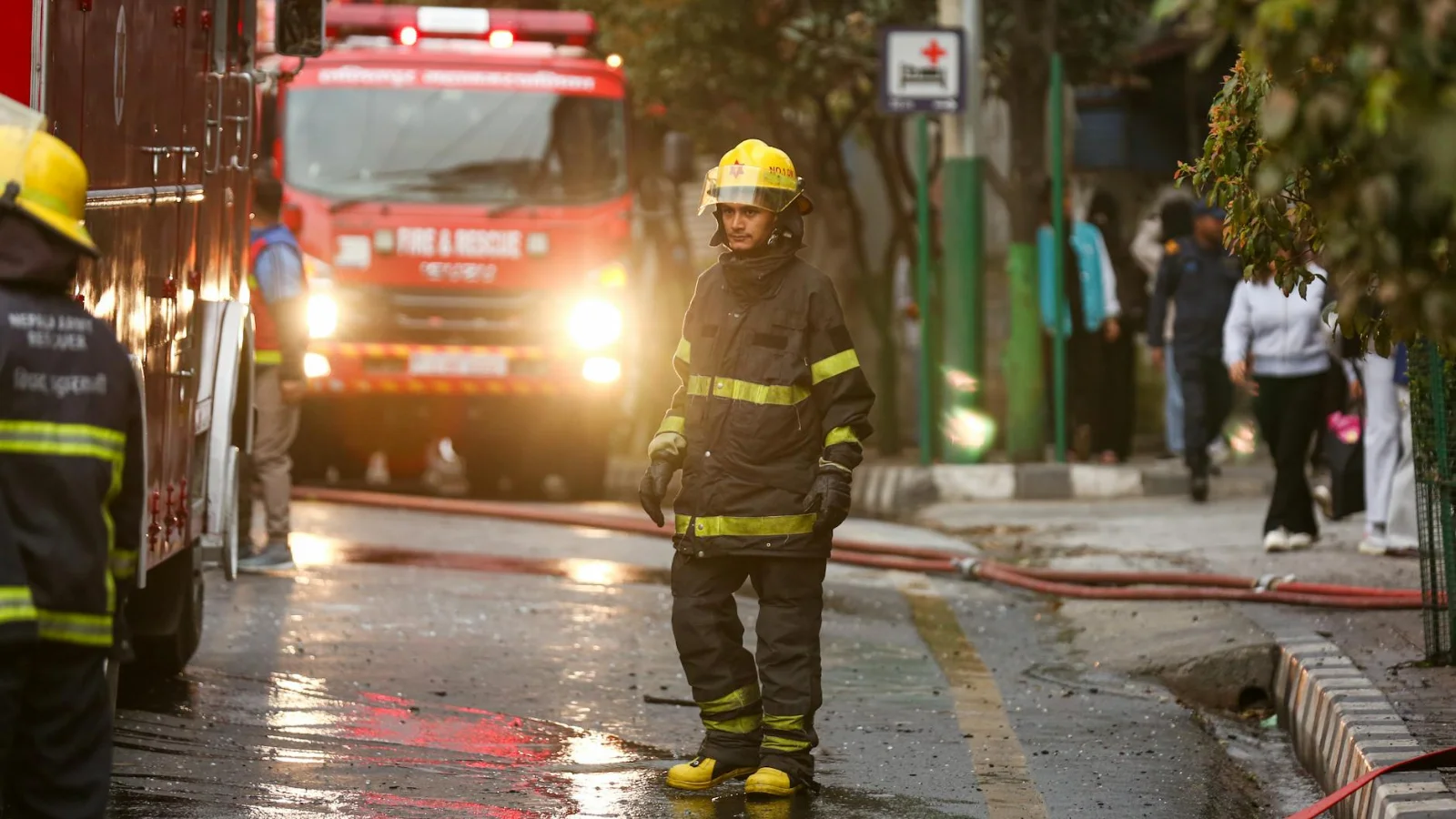
The Delhi Fire Service (Amendment) Rules, 2025, notified by the Lieutenant Governor of the National Capital Territory of Delhi on 26 May 2026 under Section 63 of the Delhi Fire Service Act, 2007, represent the most comprehensive reform of the capital’s fire safety framework in recent years. Published in the Delhi Gazette Extraordinary, these amendments to the Delhi Fire Service Rules, 2010, introduce a technology-driven, decentralized compliance architecture anchored by third-party fire safety auditors, automated monitoring systems, and fundamental administrative restructuring. While most provisions took immediate effect upon publication, critical changes concerning fire safety certification, auditors, and automated continuous monitoring systems shall commence after ninety days from the date of publication, with pending applications being processed under the erstwhile regime.
The amendments fundamentally restructure the territorial and administrative framework of the Delhi Fire Service. The National Capital Territory is now divided into five principal Fire Zones ie., Central, East, West, North, and South with provision for additional zones based on operational exigencies. Each zone is placed under the charge of a Chief Fire Officer, assisted by Deputy Chief Fire Officers. Thirteen Fire Divisions and thirty-nine Fire Sub-Divisions have been formally constituted, with the Second Schedule carefully delineating the geographical boundaries and fire station jurisdictions for each unit. A dedicated Fire Prevention Wing has been established at the Directorate headquarters, headed by an officer not below the rank of Deputy Chief Fire Officer, tasked with examining building plans, issuing fire safety directives within a mandatory three-week window, and coordinating with statutory authorities.
The definitional framework under Rule 2 has been contemporized to align with current standards. The term “National Building Code of India” now replaces the outdated 2005 reference, ensuring that the Bureau of Indian Standards code as amended from time to time governs compliance. The definition of “special area” now refers to the Master Plan of Delhi as amended from time to time, rather than the static Master Plan Delhi 2021. Most significantly, the amendment introduces the definition of “Fire Safety Auditor” as a third-party individual, firm, or company empanelled with the Director, and expands the definition of “Fire Safety Certificate” to encompass certificates issued by such auditors under delegated authority.
The scope of regulatory oversight has been substantially broadened through an expanded classification of occupancies deemed likely to cause fire risk. Residential buildings exceeding fifteen meters in height or comprising five or more stories, hotels and guest houses exceeding twelve meters or four stories, and educational and institutional buildings exceeding nine meters or three stories now fall within the regulatory net. All assembly buildings, business buildings exceeding fifteen meters, mercantile buildings exceeding nine meters, industrial and storage buildings exceeding two hundred and fifty square meters, hazardous buildings exceeding one hundred square meters, and underground structures comprising two or more levels are similarly captured.
The centrepiece of the reform is the introduction of empanelled Fire Safety Auditors under Rule 35 and the Seventh Schedule. Building owners or occupiers are now required to engage an auditor from the Delhi Fire Service portal to inspect premises, submit detailed reports in Form J, and issue Fire Safety Certificates in Form H along with declarations in Form I. These certificates are deemed issued under the delegated authority of the Director but remain subject to verification and random inspection. The rules mandate that not less than five percent of certificates issued by auditors in a quarter shall be subject to random inspection by fire officers. Importantly, the issuance of a certificate by an auditor does not absolve the owner or occupier of primary responsibility for maintaining fire safety measures, and the Delhi Fire Service is expressly shielded from liability except in cases of mala fide or gross negligence by its officers. To prevent conflicts of interest, no auditor may certify a building for which they or their firm provided design, consultancy, installation, or maintenance services. The auditors are deemed public servants under the Bharatiya Nyaya Sanhita, 2023, and must submit all documents online along with a fee of one thousand rupees.
The Seventh Schedule establishes a rigorous three-tier qualification and authorization framework. Level One auditors are authorized for hotels, guest houses, and residential buildings below fifteen meters, requiring specific engineering qualifications and one to three years of experience. Level Two auditors may inspect all buildings below fifteen meters, requiring two to five years of experience depending on qualifications. Level Three auditors are authorized for all buildings without height restriction, requiring ten years of experience or prior progression through lower levels. Registration is valid for three years, applied through Form U, and requires indemnity insurance bonds ranging from ten to thirty lakh rupees depending on level. Penalties for non-compliance or falsification range from two to ten lakh rupees, with second defaults resulting in blacklisting and deregistration. Mandatory training at the Fire Safety Management Academy ranges from three to seven days across levels. Fee caps for audit services are strictly prescribed, ranging from ten thousand to five lakh rupees per certification, and auditors are barred from undertaking two consecutive certifications for the same premises.
Rule 36 governs the duration and renewal of Fire Safety Certificates. Certificates remain valid unless suspended or cancelled, subject to the annual online submission of Form K by the auditor, owner, occupier, or Fire Safety Officer before completion of one year from issuance or last submission. Existing certificates issued under the Principal Rules are deemed valid under the amended framework. Rule 37 introduces the Automated Continuous Monitoring System, an IoT-based mechanism mandatory for the expanded classes of occupancies. Phase One requires real-time monitoring of active and passive fire safety measures with alerts to owners and auditors, while Phase Two will eventually integrate critical alarms with the Delhi Fire Service. The system must monitor hydrant and sprinkler pumps, fire water tanks, detection systems, manual call points, public address systems, pressurization fans, and basement ventilation, complying with prescribed technical standards and cybersecurity protocols.
The amendments systematically digitize regulatory processes across the rules. Rules 20, 22, 25, 32, 42, and 43 now expressly permit online payment gateways alongside traditional bank drafts, and the Director is empowered to mandate exclusive online payments from a notified date. Rule 43 clarifies the compounding powers: Deputy Chief Fire Officers may compound offences up to ten thousand rupees, Chief Fire Officers up to fifty thousand rupees, and the Director may compound offences exceeding fifty thousand rupees. Rule 47 revises reward limits for exemplary performance, empowering the Director to sanction up to one lakh rupees, the Chief Fire Officer up to seventy-five thousand rupees, and the Deputy Chief Fire Officer up to fifty thousand rupees, with the government retaining power to exceed these limits on the Director’s recommendation.
The First Schedule has been comprehensively updated with substituted Forms B, H, I, J, K, and L, and the insertion of Form U for auditor registration. The Third Schedule now incorporates prescribed drawings of car flags. The Fourth and Fifth Schedules provide for an annual five percent enhancement of deployment fees effective from 1 April 2026. The erstwhile Sixth Schedule has been restructured to accommodate the Seventh Schedule on auditor qualifications, while training charges continue to be governed by the Academy’s stipulations.
The Delhi Fire Service (Amendment) Rules, 2025, constitute a far-reaching legislative intervention that shifts the capital’s fire safety paradigm from reactive inspection to preventive, technology-enabled compliance. By decentralizing certification through qualified third-party auditors, mandating real-time IoT monitoring, expanding the regulatory footprint to cover a wider spectrum of occupancies, and embedding digital processes throughout the administrative framework, the amendments seek to create a strong ecosystem of accountability. The careful calibration of auditor qualifications, indemnity requirements, rotational mandates, and penal consequences ensures that delegated authority does not dilute statutory standards. These reforms, taken together, represent a significant advancement in urban fire safety governance, aligning Delhi’s regulatory architecture with contemporary technological capabilities and the imperatives of public safety.
For further details write to contact@indialaw.in
By entering the email address you agree to our Privacy Policy.