Mitigation of Dust Pollution from Construction and Demolition Activities: Legal Obligations and Compliance Requirements under the CAQM Act, 2021
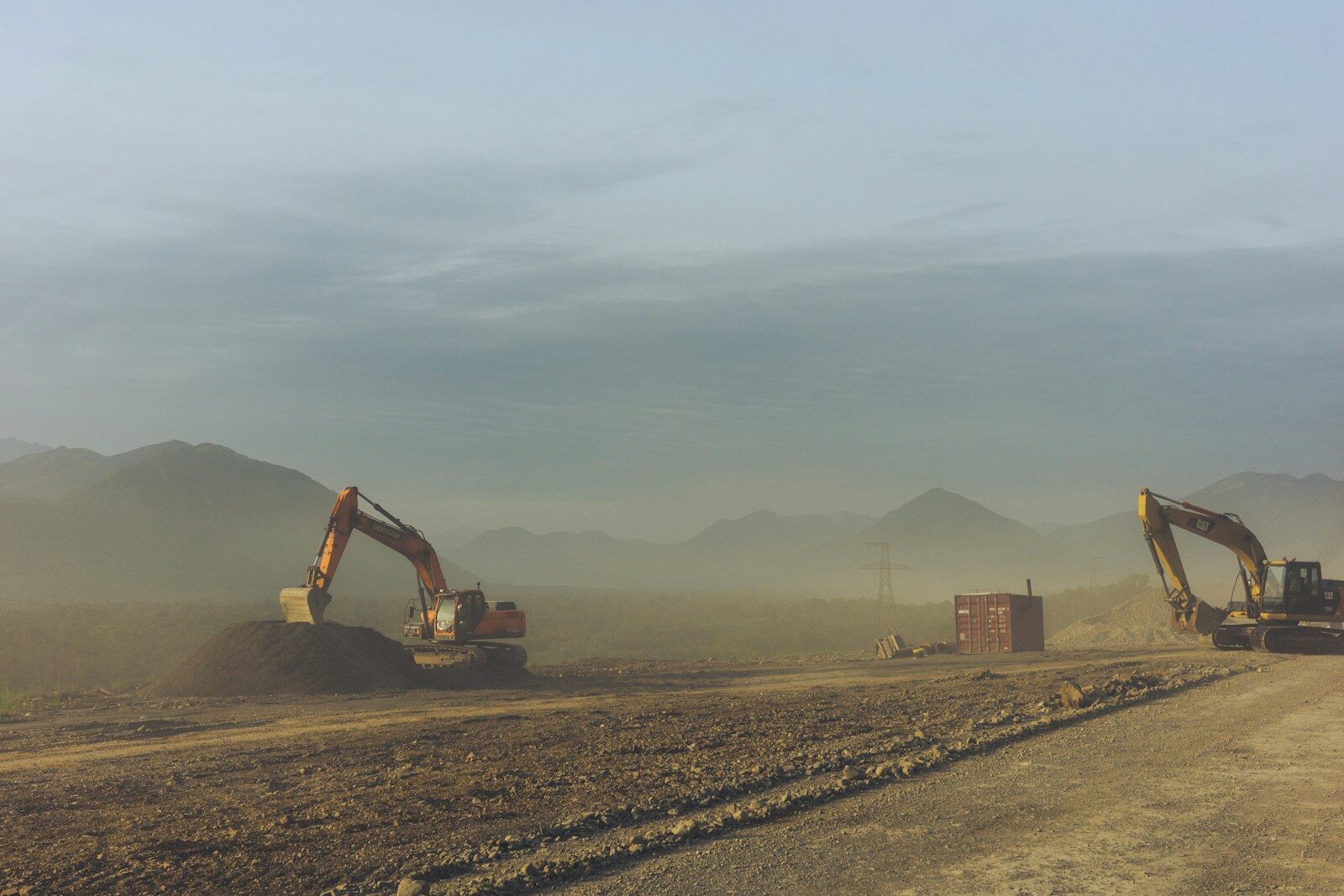
The deteriorating air quality in the National Capital Region and adjoining areas has emerged as a matter of grave environmental and public health concern, necessitating stringent regulatory interventions by the competent authorities. The Commission for Air Quality Management in National Capital Region and Adjoining Areas, constituted under the Commission for Air Quality Management in National Capital Region and Adjoining Areas Act, 2021, has been vested with expansive powers under Section 12 thereof to issue directions for the protection and improvement of air quality in the region. In exercise of these statutory powers, and in furtherance of the objectives enshrined in the said legislation, the Commission has issued comprehensive directions pertaining to the mitigation of dust in construction and demolition projects and the management of demolition waste, which shall come into force with effect from the first day of April, 2026. These directions represent a significant evolution in the regulatory landscape governing construction and demolition activities, introducing mandatory compliance mechanisms, enhanced infrastructure requirements, and technology-driven monitoring systems to address the persistent challenge of dust pollution emanating from such activities.
The statutory foundation for these directions derives from the Commission’s mandate under Section 12(1) of the CAQM Act, 2021, which empowers the Commission to take all such measures and issue such directions as it deems necessary or expedient for the purpose of protecting and improving the quality of air in the National Capital Region and adjoining areas. The Commission has consistently identified dust generated from construction and demolition activities as a major and consistent source of air pollution, contributing substantially to the elevated levels of particulate matter, specifically PM₂.₅ and PM₁₀, in the ambient air. This particulate pollution poses significant health risks to the resident population and exacerbates the air quality crisis, particularly during the winter months when meteorological conditions are unfavorable for pollutant dispersion. Despite the existence of prior regulatory frameworks, including the Construction and Demolition Waste Management Rules, 2016, and various guidelines issued by the Central Pollution Control Board, compliance levels have remained unsatisfactory, necessitating more stringent and enforceable measures.
The historical context of regulatory intervention in this domain reveals a progressive tightening of compliance requirements. The Commission had earlier issued Direction No. 11-18 dated the 11th day of June, 2021, which mandated the registration of all construction and demolition projects with a plot area equal to or exceeding five hundred square meters on the respective web portals of the state governments or the Government of the National Capital Territory of Delhi. This direction further stipulated the implementation of video fencing for all registered projects, the establishment of self-audit and certification mechanisms by agencies on a fortnightly basis, and the installation of low-cost air quality monitoring sensors at project sites. Additionally, a comprehensive array of dust control and mitigation measures was prescribed, encompassing the installation of wind barriers and breakers at project boundaries, the provision of dust screens covering areas under construction, the regular deployment of water sprinklers and mist systems, the proper covering of construction materials and debris, and the mandatory transportation of construction materials and demolition waste exclusively through covered vehicles. These measures were subsequently augmented by Direction No. 69 dated the 2nd day of November, 2022, which mandated the deployment of anti-smog guns in proportion to the area of construction, reflecting the Commission’s recognition of the need for enhanced technological interventions to combat dust emissions.
Notwithstanding these regulatory measures, periodic reviews and inspections conducted by the State Pollution Control Boards in the National Capital Region, the Delhi Pollution Control Committee, and the flying squads of the Commission have consistently indicated unsatisfactory levels of compliance and ineffective implementation of statutory directions, rules, and guidelines by project proponents. Specific concerns have been raised regarding heavy dust pollution arising from the transportation of construction materials and demolition debris in open or semi-open trucks, in flagrant violation of the prescribed norms. The Commission has taken serious cognizance of these violations, which have been reported not only by implementing and supervising agencies but also through public complaints and representations, and has determined that appropriate stringent action against violators and against officials responsible for non-compliance is necessary to ensure the efficacy of the regulatory framework.
The regulatory landscape has been further transformed by the notification of the Environment (Construction and Demolition) Waste Management Rules, 2025, on the 2nd day of April, 2025, which shall supersede the existing Construction and Demolition Waste Management Rules, 2016, with effect from the 1st day of April, 2026. These new rules introduce significant innovations in waste management practices, including specific measures for waste utilization, mechanisms to address non-compliance, and alignment with circular economy and resource efficiency approaches. The introduction of extended producer responsibility, environmental compensation regimes, and centralized interface systems based on monitoring and compliance assessment represents a paradigm shift towards more sustainable and accountable waste management practices. The Commission’s directions are expressly designed to ensure the effective implementation of these new rules alongside the existing regulatory requirements.
The scale of construction and demolition activities ongoing in major cities within the Delhi-National Capital Region is substantial, with these activities contributing remarkably high loads of PM₁₀ and PM₂.₅ to the overall ambient air pollution. The concerned municipal bodies and authorities in these cities require enhanced capabilities to supervise and monitor the abatement of dust pollution from such activities. It is incumbent upon project proponents to manage demolition waste in a responsible manner before commencing construction activities, and equally incumbent upon municipal bodies and authorities to provide mechanisms facilitating the scientific management of such waste. Recognizing these imperatives, the Commission has issued binding directions under Section 12 of the CAQM Act, 2021, which impose specific obligations on various stakeholders and create a comprehensive framework for construction and demolition waste management.
The directions mandate that municipal corporations and development authorities in the Delhi-National Capital Region shall ensure the establishment of collection points, intermediate waste storage facilities, and processing facilities in accordance with the provisions of the Construction and Demolition Waste Management Rules, 2025. These facilities must be established in such a manner that there is at least one collection point within every grid of five kilometres by five kilometres area under their respective jurisdictions. This requirement ensures decentralized accessibility to waste deposition facilities, thereby reducing the logistical burden on project proponents and facilitating compliance. The building plan approving authorities in the concerned cities are directed to obtain a declaration of the estimated quantity of demolition waste to be generated before granting approval of the building plan, in all cases of projects with a plot area equal to or exceeding two hundred square meters where demolition is required to be carried out prior to construction or reconstruction. This pre-approval declaration mechanism ensures that waste generation is accounted for at the planning stage itself, enabling better preparation and resource allocation by the authorities.
In a significant strengthening of compliance requirements, the directions stipulate that municipal corporations and development authorities shall ensure that in all cases of projects with a plot area equal to or exceeding two hundred square meters where demolition is required, the project proponent, prior to taking up construction or reconstruction, shall deposit the demolition waste at any designated collection point or storage or processing facility and obtain a receipt for the same. This mandatory pre-construction deposition requirement creates a clear linkage between waste management compliance and the commencement of construction activities, ensuring that demolition waste does not remain unattended or improperly disposed of at project sites. All agencies responsible for issuing completion certificates or occupation certificates in the concerned cities are directed to verify the receipt of deposition of demolition waste submitted by the project proponent prior to issuance of such certificates. This verification requirement creates a post-construction compliance checkpoint, ensuring that the waste management obligations are fulfilled throughout the project lifecycle.
The directions further require municipal corporations and development authorities to ensure the transportation and disposal of construction and demolition waste within their jurisdiction in an environmentally sound manner, in accordance with the extant rules. This obligation reinforces the principle that waste management is a continuous responsibility extending from generation through transportation to final disposal or processing. The directions shall come into force with effect from the 1st day of April, 2026, and the municipal corporations, development authorities, and the National Capital Region State Pollution Control Boards and the Delhi Pollution Control Committee are directed to ensure wider dissemination of these directions among all concerned stakeholders, including project proponents. The agencies responsible for issuing completion certificates and occupation certificates are expressly directed to ensure strict compliance with these directions of the Commission.
Recognizing the imperative of technology integration for effective monitoring and enforcement, the National Capital Region state governments and the Government of the National Capital Territory of Delhi are directed to ensure the establishment of an integrated web portal, the geo-tagging of waste collection points and storage and processing facilities, and the GPS tracking of transportation of construction and demolition waste. These digital interventions will facilitate real-time monitoring, enhance transparency, enable verification of compliance, and create an audit trail for regulatory purposes. The integrated web portal will serve as a centralized interface for stakeholders to access information, submit declarations, and track the status of waste deposition and processing, thereby reducing information asymmetries and administrative bottlenecks.
The enforcement mechanism underlying these directions is robust and carries significant penal consequences. Section 12(2)(xi) of the CAQM Act, 2021, specifically empowers the Commission to issue directions to any person, officer, or authority, who shall be bound to comply with such directions. The directions issued by the Commission are binding in nature, and such persons, officers, or authorities are legally obligated to comply with them. Section 14 of the Act stipulates that any non-compliance with or contravention of any provisions of the Act, rules made thereunder, or any order or direction issued by the Commission shall constitute a punishable offence. Section 14(2) further provides that such offences shall be non-cognizable and triable by the jurisdictional judicial magistrate of the first class, who shall not take cognizance of the offence except upon a complaint made by the Commission or any other officer authorized by the Commission in this behalf. This specialized enforcement mechanism ensures that violations are addressed through appropriate judicial channels while maintaining the Commission’s oversight over prosecution decisions.
The Commission has explicitly warned that non-compliance with these directions may lead to penal action in terms of Section 14 of the CAQM Act, 2021. This warning serves as a clear signal to all stakeholders that the Commission intends to enforce these directions rigorously and that violations will not be tolerated. The directions have been addressed to the secretaries-in-charge of environment and urban development departments of the Government of the National Capital Territory of Delhi, Haryana, Rajasthan, and Uttar Pradesh, the directorates of urban local bodies and local self governance, the commissioners of municipal corporations and chief executive officers of development authorities in the National Capital Region areas of the respective states, and the member secretaries of the Delhi Pollution Control Committee and the state pollution control boards. The directions have also been copied to the chief secretaries of the respective governments with a request for further dissemination and necessary instructions to the concerned authorities and officials, ensuring that the regulatory requirements percolate down to all levels of implementation.
In conclusion, the directions issued by the Commission for Air Quality Management represent a comprehensive and integrative approach to addressing the persistent challenge of dust pollution from construction and demolition activities in the National Capital Region and adjoining areas. By mandating the establishment of decentralized waste collection infrastructure, introducing pre-construction declaration and deposition requirements, creating verification checkpoints through the completion and occupation certificate processes, integrating technology-enabled monitoring systems, and establishing clear enforcement mechanisms with penal consequences, the Commission has constructed a multi-layered regulatory framework that addresses the entire lifecycle of construction and demolition projects. The effectiveness of these directions will ultimately depend upon the diligent implementation by municipal corporations, development authorities, building plan approving agencies, and certificate issuing authorities, as well as the active compliance by project proponents. As the directions come into force on the 1st day of April, 2026, stakeholders must prepare for enhanced compliance obligations and recognize that responsible construction and demolition waste management is no longer merely a regulatory requirement but a statutory imperative essential for the protection and improvement of air quality in the region. The Commission’s intervention underscores the principle that environmental protection necessitates the integration of planning, infrastructure development, technological innovation, and enforcement, and sets a precedent for region-wide regulatory coordination in addressing complex environmental challenges.
For further details write to contact@indialaw.in
By entering the email address you agree to our Privacy Policy.