When an Undertaking is Broken: The Supreme Court’s Stern Message on Contempt and Elephant Welfare
Jayakrishna Menon v. Krishnankutty & Ors.
Contempt Petition (Civil) Nos. 59-60 of 2026 | 2026 INSC 631 | Decided: June 9, 2026
Introduction
A Division Bench of the Supreme Court of India comprising Justice Dipankar Datta and Justice Satish Chandra Sharma, in its judgment dated June 9, 2026, addressed a compelling intersection of contempt jurisdiction, wildlife protection, and the judicial obligation of courts towards voiceless beings. The case, arising from Contempt Petition (Civil) Nos. 59-60 of 2026 in Criminal Appeal Nos. 4836-4837 of 2024, presented the Court with the question of whether the respondent had wilfully disobeyed a solemn undertaking recorded before the Court and, if so, what consequences must follow to uphold the dignity of judicial orders.
Background and Genesis of the Dispute
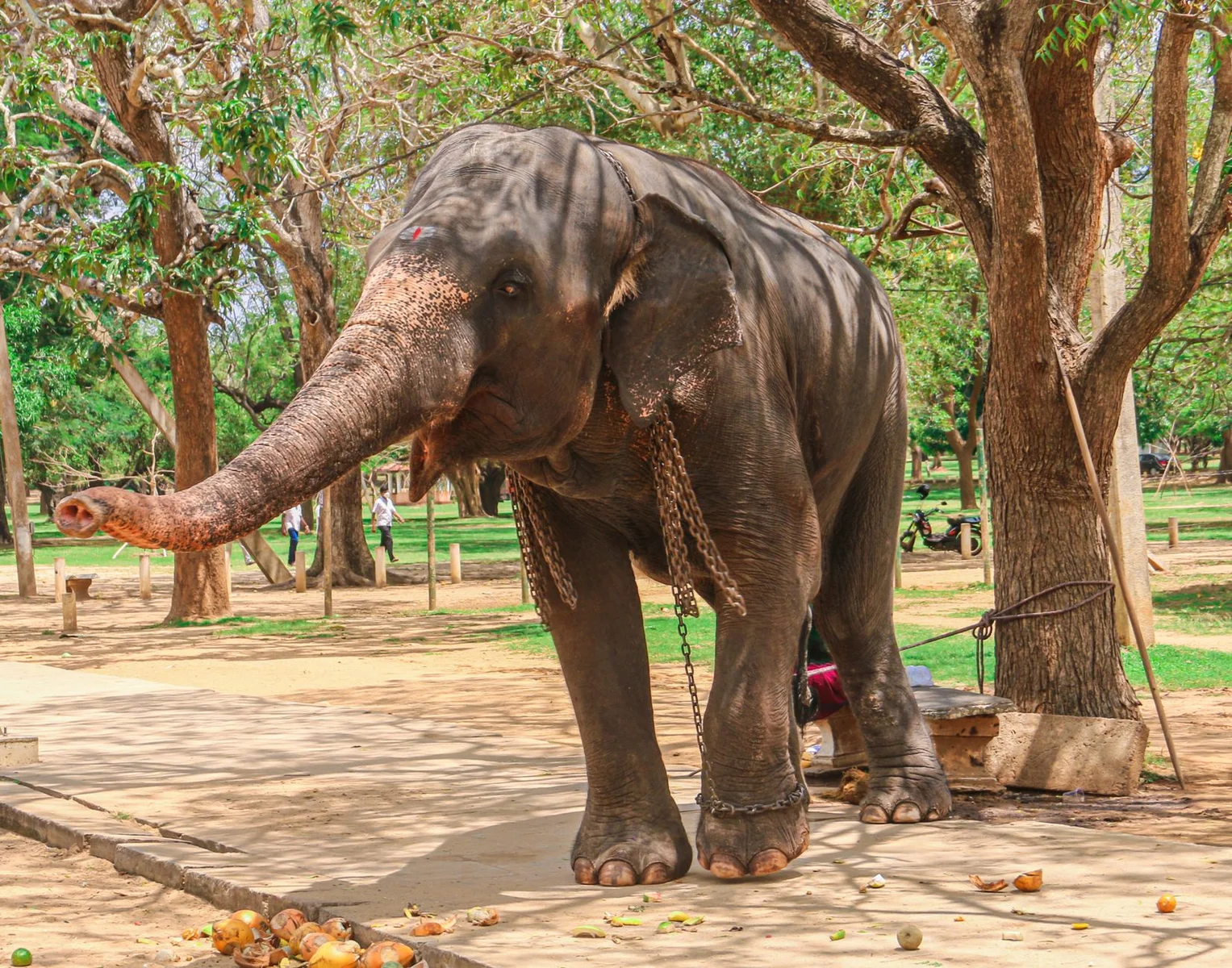
At the heart of these proceedings lies a custody dispute over Raman, a captive elephant widely acknowledged as the tallest in the State of Kerala. The Contempt Petitioner, Jayakrishna Menon, asserted that Raman was the lawful property of the Mata Amritanandamayi Mutt and had been entrusted to Respondent No. 1, Krishnankutty, solely for the purposes of upkeep and care. It was alleged that Respondent No. 1 thereafter unlawfully retained custody of Raman, purporting to assert ownership on the basis of gift deeds dated February 18, 2017 and February 28, 2017, which the Petitioner characterised as forged and fabricated.
The Petitioner further contended that any purported transfer of a captive elephant, even if otherwise valid inter se the parties, would be rendered void in the absence of prior approval mandated under the Wildlife (Protection) Act, 1972. Respondent No. 1, for his part, maintained that the transfer was lawful and that he had been continuously providing maintenance and care for Raman for a period of ten to twelve years.
Procedural History
Criminal proceedings were initiated in Kerala, resulting in the registration of Crime No. 1000 of 2023 against Respondent No. 1 under Sections 406 and 420 of the Indian Penal Code, 1860, in connection with the alleged illegal retention and maltreatment of the elephant. The Petitioner thereafter filed an application under Section 451 of the Code of Criminal Procedure, 1973 seeking interim custody of Raman, and the dispute traversed through multiple rounds of proceedings before the Trial Court and the High Court of Kerala.
The Trial Court, vide its order dated December 18, 2023, granted interim custody of Raman to the Petitioner subject to execution of a bond of INR 25,00,000. This order was challenged before the High Court in Criminal Misc. Case No. 7600 of 2023, whereupon the High Court, vide its order dated November 20, 2023, remanded the matter for fresh adjudication. The said orders came to be assailed before the Supreme Court in Criminal Appeal Nos. 4836-4837 of 2024, which remained pending final disposal.
During the pendency of the Underlying Appeals, the Supreme Court issued a status quo order on January 22, 2024 with respect to the custody of Raman, which was extended from time to time. Subsequently, on August 6, 2025, the Court directed the Principal Chief Conservator of Forests to conduct an inspection of Raman and submit a health report within two weeks. On the same date, learned counsel appearing for the appellant made a categoric undertaking before the Court that the elephant would not be used for any commercial or temple activities in the interim. On August 21, 2025, having noted that close examination had been rendered impractical owing to Raman being in musth, the Court directed the Chief Wildlife Warden to conduct a thorough examination upon the conclusion of the musth period.
Contempt Allegations and Rival Submissions
The Contempt Petitions were instituted alleging that Respondent No. 1 had flagrantly violated the undertaking recorded before the Court by continuing to deploy Raman in temple festivals, public processions, and commercial events. The Petitioner placed on record photographs, promotional posters, and social media content purportedly evidencing such exploitation.
Respondent No. 1 vehemently disputed the allegations, contending that the material relied upon by the Petitioner either pre-dated the Court’s order or constituted publicity independently generated by the Temple Committee, with no actual participation of Raman in post-order events. However, Respondent No. 1 candidly admitted in written submissions that on one occasion, following veterinary advice that the elephant be taken for walks during its recovery from musth, another scheduled elephant had fallen ill, prompting temple authorities to request Raman’s presence for a brief ceremonial ritual. An unconditional apology was tendered, with the submission that the act was neither deliberate nor wilful.
Insofar as the State Authorities Respondents Nos. 2 to 9 were concerned, a report dated February 3, 2026 disclosed that an inspection attempted on November 11, 2025 had proved unsuccessful as Raman remained in musth. A detailed examination was ultimately conducted on February 3, 2026 at Chavakkad by a three-member committee. Notably, the report itself revealed that the elephant had been brought to Chavakkad for participation in a temple festival ceremony a fact that further corroborated the Petitioner’s allegations against Respondent No. 1.
The Court’s Analysis and Reasoning
The Supreme Court, after carefully examining the record, held that the fact of Raman’s participation in ceremonial processions and temple rituals in contravention of the undertaking was not merely established but was, in effect, admitted by Respondent No. 1 in his own written arguments. The written admission, coupled with the State’s inspection report confirming the elephant’s presence at a temple festival, rendered the breach beyond dispute.
The Court expressed its profound concern over the commercial exploitation of Raman in defiance of a subsisting judicial order, noting that it would be failing in its duty towards voiceless beings if it turned a blind eye to such conduct. The Court’s observations that it cannot be a mute spectator in matters concerning voiceless animals whose welfare is critical reflect a growing jurisprudential recognition of animal welfare as a legitimate judicial concern.
With respect to the State Authorities, the Court found that a genuine attempt had been made to conduct the examination in November 2025, which was frustrated by the elephant’s continued musth. Given that the inspection was eventually conducted in February 2026, the Court declined to hold the State Authorities guilty of wilful disobedience and accordingly discharged them from the contempt proceedings.
Final Directions and Outcome
The Supreme Court unequivocally held Respondent No. 1 guilty of contempt of court for wilfully disobeying the undertaking made before it. In the interest of justice, and having regard to the circumstances, the Court imposed a fine of INR 2,000 upon Respondent No. 1, to be deposited with the Registry within four weeks.
More significantly, with a view to prioritising Raman’s health and overall well-being pending the final adjudication of the custody question in the Underlying Appeals, the Court directed the State of Kerala to take over temporary custody of the elephant and house him in an appropriate rescue or rehabilitation centre. The State was also permitted to care for Raman at its own expense and to issue appropriate administrative orders in conformity with the Wildlife (Protection) Act, 1972.
Commentary and Significance
The judgment in Jayakrishna Menon v. Krishnankutty is a timely reminder of the sanctity of undertakings made before courts of law. An undertaking recorded before a court constitutes a solemn representation that is treated as an order of the court; its breach, irrespective of the motive advanced, falls squarely within the ambit of contempt. The defence of religious sentiment, however sincerely held, cannot serve as a shield against the binding force of judicial directions.
Equally noteworthy is the Court’s exercise of its inherent jurisdiction to transfer custody of Raman to the State, thereby ensuring that the welfare of a captive animal is not held hostage to protracted inter-party litigation. This approach signals a commendable judicial willingness to go beyond the immediate controversy and to exercise protective jurisdiction in the interest of those who cannot advocate for themselves.
For further details write to contact@indialaw.in
By entering the email address you agree to our Privacy Policy.