Citizenship, Statelessness And The Limits Of Lineage: Re-Examining “Person Of Indian Origin” For Children Born To OCI Cardholder
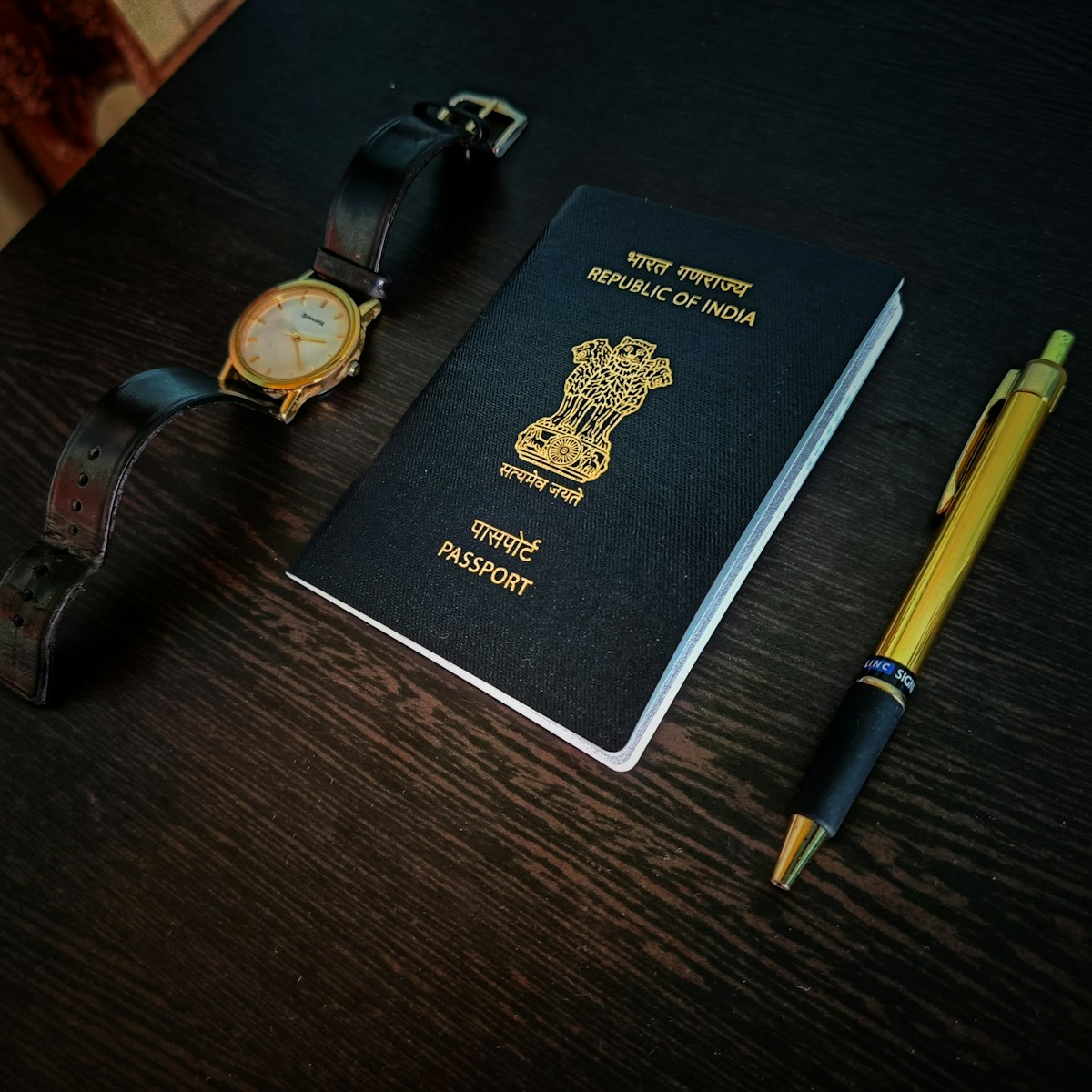
Supreme Court of India to clarify the Contours of Citizenship by Registration under the Citizenship Act, 1955
Introduction
Citizenship occupies a unique position in constitutional democracies. It is not merely a legal status, but the foundation upon which civil, political, and socio-economic rights are exercised. In India, citizenship law reflects a careful balance between sovereignty, migration control, and constitutional guarantees of dignity and equality. The ongoing proceedings before the Supreme Court in Rachita Francis Xavier v. Union of India & Ors. Brings this balance into the sharp focus.
At the heart of the dispute lies a narrow yet profound question: can a child born in India to parents who are Overseas Citizens of India (OCI), but foreign nationals at the time of birth, be regarded as a “person of Indian origin” for the purpose of citizenship by registration?
The answer to this question has ramification far beyond the individual case. It implicates the scope of statutory interpretation under the Citizenship Act, 1955, the limits of executive discretion, and India’s constitutional obligation to prevent statelessness.
The Supreme Court’s eventual determination will therefore serve as a defining moment in contemporary citizenship jurisprudence, clarifying whether strict statutory lineage must prevail over lived reality, or whether constitutional principles permit a more purposive and humane interpretation of citizenship provisions.
Table of Contents
Evolution of Indian Citizenship Law: From Jus Soli to Jus Sanguinis
At the time of commencement of the Constitution, India adopted a broad and inclusive approach to citizenship. Article 5 to 11 of the Constitution envisaged citizenship largely on the basis of domicile and birth. The Citizenship Act, 1955 initially reflected this philosophy, granting citizenship to most persons born in India irrespective of parental nationality.
However, successive amendments, particularly in 1986, 2003, and 2005 significantly narrowed this approach. The 2003 amendment marked a decisive shift by introducing the concept of “illegal migrant” and restricting citizenship by birth to children whose parents met specific nationality and migration criteria.
This evolution reflects a conscious legislative move from territorial birth right to controlled citizenship, driven by concerns of illegal immigration and demographic balance. Yet, as the present case demonstrates, this shift has also created hard cases where children born lawfully in India are rendered legally invisible.
Factual Matrix: The Case of Rachita Francis Xavier
Rachita Francis Xavier was born in 2006 in Andhra Pradesh. Her parents were originally Indian citizens who later acquired the citizenship of the United States. At the time of her birth, they were residing in India as OCI cardholders under the valid legal status.
Rachita spent her entire childhood in India. In 2019, her application for an Indian passport was rejected on the ground that she was not an Indian citizen. Simultaneously, she did not possess US citizenship, effectively rendering her stateless. This administrative determination became the catalyst for the constitutional challenge.
Statutory Framework Governing Citizenship
Citizenship by Birth: Section 3 of the Citizenship Act, 1955
Section 3 governs acquisition of Indian citizenship by birth. Following the amendment brought into force on 3 December 2004, citizenship by birth is no longer automatic.
Section 3(1) provides:
“Except as provided in sub-section (2), every person born in India-
- on or after the 26th day of January, 1950, but before the 1st day of July, 1987; or
- on or after the 1st day of July, 1987, but before the commencement of the Citizenship (Amendment) Act, 2003, and either of whose parents is a citizen of India at the time of his birth; or
- on or after the commencement of the Citizenship (Amendment) Act, 2003, where-
- both of his parents are citizens of India; or
- one of whose parents is a citizen of India and the other is not an illegal migrant at the time of his birth,
shall be a citizen of India by birth.”
Under clause (c), applicable to children born after 3 December 2004, citizenship by birth is conditional upon the citizenship or migration status of the parents. In the present case, since both parents were foreign citizens at the time of birth, Section 3 did not operate in favour of the appellant.
Definition of ‘Illegal Migrant’: Section 2(1)(b)
A central issue in the proceedings was whether a child born in India could be categorised as an “illegal migrant”.
Section 2(1)(b) defines “illegal migrant” as: “a foreigner who has entered into India-
- without a valid passport or other travel documents and such other documents or authority as may be prescribed by or under any law in that behalf; or
- with a valid passport or other travel documents and such other documents or authority as may be prescribed by or under any law in that behalf but remains therein beyond the permitted period of time.”
The statutory definition presupposes entry into India or overstay, concepts which became contentious when applied to a person born within Indian Territory.
Citizenship by Registration: Section 5
Section 5 of the Citizenship Act provides for acquisition of citizenship by registration, subject to fulfilment of specified conditions.
- Person of Indian Origin – Section 5(1)(a)
Section 5(1)(a) states:
“Subject to the provisions of this section and such conditions and restrictions as may be prescribed, the Central Government may, on an application made in this behalf, register as a citizen of India any person who is not an illegal migrant and who- (a) is a person of Indian origin who is ordinarily resident in India for seven years before making an application for registration.”
The interpretation of the expression “person of Indian origin” under this clause lies at the heart of the dispute.
Explanation to Section 5 – Meaning of ‘Person of Indian Origin’
The Explanation appended to Section 5 clarifies who may be regarded as a person of Indian origin:
“For the purposes of this section, a person shall be deemed to be of Indian origin if he, or either of his parents or any of his grandparents, was born in undivided India.”
The phrase “undivided India” has been judicially interpreted to mean India prior to 15 August 1947, a construction reaffirmed by the Supreme Court in Union of India v. Pranav Srinivasan.
- Citizenship by Registration Based on Parentage: Section 5(1)(f)
Section 5(1)(f) provides an additional route for citizenship by registration:
“a person who has been registered as an Overseas Citizen of India Cardholder under section 7A and who has been ordinarily resident in India for five years before making an application for registration.”
Further, the provision also contemplates registration where a parent was earlier a citizen of independent India, a submission relied upon by the appellant before the Supreme Court.
Special Power of the Central Government: Section 5(4)
Section 5(4) confers broad discretionary power on the Central Government, particularly in cases involving minors.
Section 5(4) reads:
“The Central Government may, if satisfied that there are special circumstances justifying such registration, cause any minor to be registered as a citizen of India.”
This provision does not define “special circumstances”, thereby granting the executive wide latitude to address exceptional cases not squarely covered by the statute.
In the present case, Section 5(4) formed the statutory basis for the eventual grant of citizenship to the appellant.
Office Memorandum dated 25 October 2018
The executive instructions relied upon by the authorities stem from the Office Memorandum dated 25 October 2018, which clarifies that where both parents renounce Indian citizenship, a minor child does not automatically retain Indian citizenship and is consequently ineligible for an Indian passport, unless statutory conditions are satisfied.
The constitutional validity and application of this Office Memorandum were challenged before the Delhi High Court.
OCI Framework: Section 7A
OCI status is a statutory construct granting limited privileges to foreign citizens of Indian origin. Crucially:
- OCI is not citizenship
- OCI does not automatically transmit citizenship to children
- OCI children are treated as foreigners unless otherwise registered
Finding and Judicial Reasoning
Finding of the Single Judge (Delhi High Court- Order dated 15th May 2024)
The Single Judge of the Delhi High Court was confronted with a situation where the existing statutory framework under the Citizenship Act, 1955 did not expressly contemplate the legal position of a child born in India to parents holding Overseas Citizenship of India (OCI) Cards, who were foreign nationals at the time of birth.
The Court noted that although the appellant was born and had continuously resided in India, she was denied recognition as an Indian citizen and simultaneously did not possess citizenship of any other country. This, according to the Court, resulted in a state of de facto statelessness, with serious implications for her fundamental and human rights.
A Bench of Justice Prathiba M Singh held, “The non-grant of citizenship and the consequent non-grant of a passport can have a deleterious impact on the Petitioner and her family. There is no reason why the Petitioner, a young girl ought to be made to struggle due to an unusually uncomfortable position she has been placed in – may be due to decisions made by her parents/family.”
The Court also rejected the Union’s contention that the appellant could be classified as an “illegal migrant” under Section 2(1)(b) of the Citizenship Act, 1955. It held that the definition of illegal migrant presupposes unauthorised entry or overstay, neither of which could logically apply to a child born within Indian Territory who had never crossed international borders.
Accordingly, the Court held that the appellant could not be treated as an illegal migrant, as such classification would be legally artificial and constitutionally impermissible.
Recognizing the absence of provisions directly applicable to her case, the Court invoked a broader interpretation of the law. It added, “The case would be covered under Explanation 2, as both parents of the Petitioner were Indian citizens who had thereafter obtained US citizenship. In addition, the Petitioner was born in India when her parents were legally residing in India as OCI card holders.”
The Single Judge further held that the appellant could be deemed a “person of Indian origin” under Section 5(1)(a) of the Citizenship Act, relying on the fact that her mother was born in India after independence. The Court reasoned that:
- The appellant had been ordinarily resident in India for more than 7 years;
- She was not an illegal migrant; and
- A purposive interpretation of “Indian origin” was necessary to avoid the statelessness.
On this basis, the Court held that the appellant was eligible to be considered for citizenship by registration. The Single Judge placed significant reliance on Section 5(4) of the Citizenship Act, which empowers the Central Government to register a minor as a citizen of India in special circumstances.
The Court observed that this provision operates as a statutory safety valve, intended to address exceptional situations where rigid application of the law would defeat justice.
Findings of the Division Bench (Delhi High Court- Judgment dated July 2025)
Although the Union of India granted Indian citizenship to the appellant on 31st July 2024, it challenged the legal reasoning adopted by the Single Judge by filing a Letter Patent Appeal.
The Union did not dispute the grant of citizenship itself but sought clarification that the Single judge’s observations should not be treated as precedent.
- The finding that the appellant was not an “illegal migrant”; and
- The declaration that the appellant qualified as a “person of indian origin”.
The Union specifically assailed:
The Union argued that under the Explanation to Section 5 of the Citizenship Act, a person can be regarded as being of Indian origin only if:
- The person or either parent was born in undivided India; or
- The person or parent was born in a territory that became part of India after 15th August 1947.
Since the appellant’s mother was born after independence, the Union contended that the statutory definition was incorrectly applied.
The Division Bench, comprising Chief Justice Devendra Kumar Upadhyaya and Justice Tushar Rao Gedela, held that the appellant was not an illegal migrant must be read in personam, confined strictly to the peculiar facts of the case.
The Court clarified that:
“Such observations cannot be read in rem so as to create a general rule applicable to similarly situated persons.”
Relying on the Supreme Court’s judgment in Union of India v. Pranav Srinivasan, the Bench reaffirmed that:
“The expression ‘undivided India’ refers to India prior to 15th August 1947, and a person born in India after independence cannot be brought within that ambit.”
Accordingly, the Division Bench set aside the Single Judge’s declaration on “person of Indian origin.” While allowing the grant of citizenship to remain undisturbed.
Findings before the Supreme Court
When the matter came up before the Supreme Court in a Special leave Petition on 8th January 2026, a Bench comprising Justice J.B. Pardiwala and Justice K.V. Viswanathan issued notice.
The appellant’s counsel submitted that the question of whether the appellant qualified as a “person of Indian origin” was not germane to the relief sought, particularly since citizenship had already been granted.
It was argued that the High Court unnecessarily ventured into a statutory interpretation exercise that was not required for deciding the appellant’s entitlement to citizenship.
Order and Direction of the Supreme Court
After hearing preliminary submission, the Supreme Court recorded that the issues raised merit consideration.
The Court directed that:
“The matter requires examination, particularly with respect to the necessity and correctness of the findings related to ‘person of Indian origin’.”
Accordingly, notice was issued, and the matter has been listed for further hearing on 30th January 2026.
Doctrinal Tensions: Statutory Rigour vs Constitutional Compassion
The case exposes a doctrinal conflict between:
- statutory literalism, and
- constituted pragmatism
The Supreme Court must determine whether Section 5(4) acts as a constitutional safety valve within the statutory scheme.
Conclusion
The case Rachita Francis Xavier highlights the tension between the strict statutory definitions of citizenship and the constitutional imperative to prevent statelessness. While the Delhi High Court Single Judge adopted a purposive approach recognising the appellant as not an “illegal migrant” and eligible for citizenship under the section 5(1)(f) and 5(4) of the act, the Division Bench limited these observations to her unique circumstances, emphasising a narrow interpretation of “person of Indian Origin” consistent with pre-Partition lineage. The Supreme Court, having issues notice, is now poised to examine the correct scope of executive discretion under Section 5(4), the statutory definition of “person of Indian origin”, and the balance between legislative intent and constitutional protections for minors effectively rendered stateless, with the matter listed for hearing on 30th January 2026.
For more details, write to us at: contact@indialaw.in
References:
- https://indiankanoon.org/doc/40505965/
- https://www.casemine.com/judgement/in/687d489000bbbc60eb3fee60/amp
- https://www.sci.gov.in/sci-get-pdf/?diary_no=614322025&type=o&order_date=2026-01-08&from=latest_judgements_order
- https://www.livelaw.in/amp/top-stories/can-child-born-to-oci-cardholders-in-india-be-regarded-as-person-of-indian-origin-supreme-court-to-decide-519502
By entering the email address you agree to our Privacy Policy.